


 Deutsch
 English
 Español
 Français
 Nederlands
 Português


 Share
Share




The World Economic Forum's Global Risks Report 2026 has ranked geoeconomic confrontation — the weaponization of tariffs, sanctions, regulations, and supply chain dependencies — as the number one risk most likely to trigger a global crisis this year. Based on a survey of over 1,300 global experts and leaders, the report signals a decisive shift: economic statecraft has overtaken traditional military threats as the defining strategic dynamic of 2026. As the United States, China, and the European Union deploy increasingly aggressive economic tools, 65% of trade professionals report shifting sourcing patterns, and 76% believe US tariffs represent a permanent structural shift rather than a temporary tactic, according to the Thomson Reuters 2026 Global Trade Report.
What Is Geoeconomic Confrontation?
Geoeconomic confrontation refers to the use of economic instruments — including tariffs, export controls, investment screening, financial sanctions, and technology restrictions — to achieve strategic objectives. Unlike traditional trade disputes, geoeconomic confrontation is explicitly geopolitical: it aims to weaken adversaries, protect strategic industries, and reshape global supply chains along national security lines. The WEF Global Risks Report 2026 defines it as a top-tier threat precisely because it blurs the line between commerce and conflict, creating cascading risks across financial markets, energy supplies, and critical technologies.
Why Geoeconomic Confrontation Topped the 2026 Risk Rankings
The Rise of Economic Statecraft
The WEF report, published in January 2026, found that geoeconomic confrontation climbed eight positions in the two-year outlook compared to the previous year. State-based armed conflict ranked second, followed by extreme weather events, societal polarization, and misinformation. The survey revealed that 50% of respondents expect a turbulent or stormy global outlook over the next two years — up 14 percentage points from 2025 — while only 1% anticipate calm conditions.
According to the WEF Global Risks Report 2026 digest, the shift reflects a world where multilateralism is in retreat and major powers increasingly view economic interdependence as a vulnerability rather than a strength. The report notes that trust in international institutions has declined sharply, with 68% of experts expecting a multipolar or fragmented global order over the next decade.
Tariffs as a Structural Shift
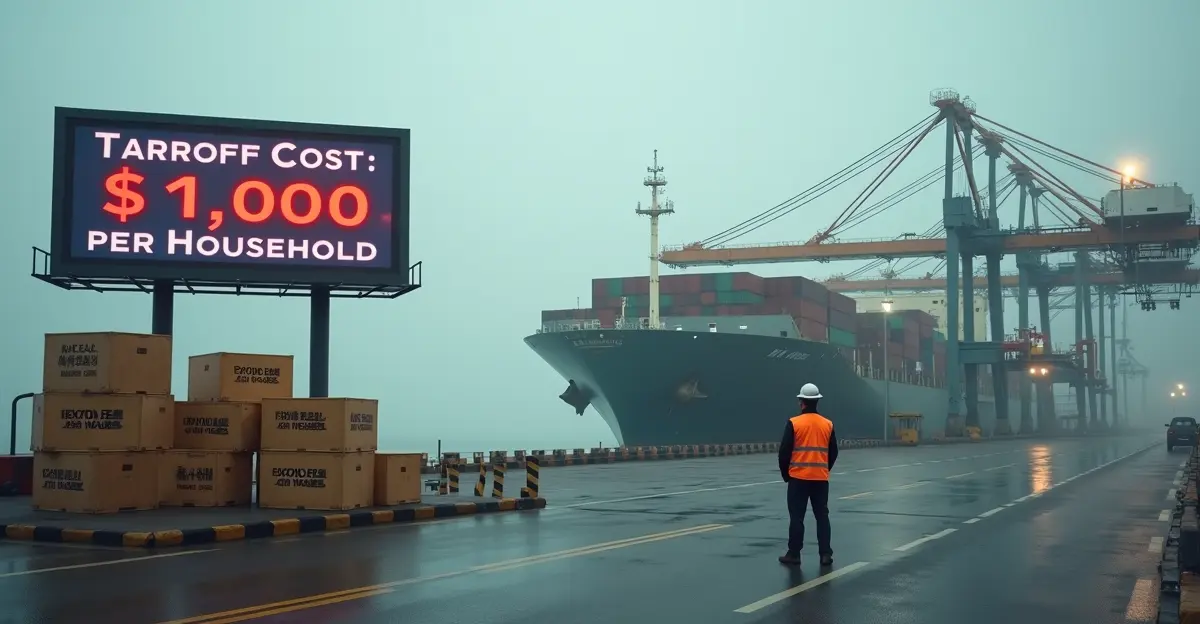
The Thomson Reuters 2026 Global Trade Report, based on a survey of trade professionals worldwide, found that 76% of respondents believe US tariffs represent a permanent structural change to global trade architecture. This perception is grounded in data: the Penn Wharton Budget Model estimated the effective US tariff rate at 7.1% as of March 2026 — the lowest since March 2025 but still near century highs when measured over the full 2025-2026 period. New tariffs raised $239.5 billion in revenue between January 2025 and March 2026, with China facing an effective rate of 25% and steel and aluminum products facing a 38.1% category rate.
The global tariff war of 2025-2026 triggered a structural shift from hyper-efficiency to supply chain resilience, with 72% of trade professionals identifying tariff volatility as the biggest challenge of 2026. A Maersk survey of 260 senior logistics decision-makers in Asia-Pacific found that 89% of respondents could implement logistics adjustments within four weeks, but most relied on short-term measures like passing costs to customers (71%) rather than structural solutions.
The Fragmentation of Global Markets
Competing Economic Blocs
The world is rapidly dividing into competing economic blocs. The United States has led the FORGE initiative (54 nations focused on friend-shoring), while the EU has enacted the Critical Raw Materials Act with ambitious 2030 benchmarks: 10% of annual extraction needs, 40% for processing, and 25% for recycling within the bloc. The EU also launched the ReSourceEU Action Plan, allocating up to €3 billion in 2026 to secure critical raw materials, including rare earths, lithium, and molybdenum.
China, meanwhile, has tightened export controls on rare earth elements and permanent magnets, triggering sixfold price spikes in some categories. The EU-China trade relations in 2026 remain fraught, with Brussels imposing export restrictions on scrap permanent magnets and aluminum, and barring exports of waste lithium-ion batteries to non-OECD countries from September 2026.
The Cost of Fragmentation
A June 2026 WEF report on trade and financial fragmentation found that geoeconomic fragmentation is costing the global economy $213–$307 billion annually and adding 0.2–0.3 percentage points to inflation. If current trends accelerate, global losses could reach $6.9 trillion (6.4% of global GDP). Emerging markets face the heaviest impact, with potential output losses of 10.7% versus 6.4% globally. The report identified five policy actions to mitigate damage, including establishing shared guardrails for the financial system, ensuring policy predictability, maintaining cross-border payment interoperability, and advancing regional integration initiatives like the African Continental Free Trade Area.
Impact on Corporate Strategy and Investment
For multinational corporations, geoeconomic confrontation has fundamentally altered strategic planning. Supply chain reconfiguration is now a boardroom priority: 65% of companies have changed sourcing patterns, and 51% are pursuing nearshoring, according to industry surveys. Vietnam (70%), Thailand (54%), and India (45%) have emerged as key multi-country hubs for manufacturing diversification.
Investment flows are also shifting. The economic bloc fragmentation in 2026 is driving capital away from cross-border exposure toward regional and domestic markets. Foreign direct investment into China fell sharply in 2025-2026, while US allies like Mexico and Vietnam saw inflows surge. The EU's Critical Raw Materials Centre, modeled on Japan's JOGMEC, is financing projects, generating market intelligence, and stockpiling critical materials for European industries.
Expert Perspectives
"Geoeconomic confrontation is not a temporary disruption — it is the new normal," said Marsh CEO John Doyle, commenting on the WEF report. "We are in a poly-crises environment involving trade wars, technology shifts, and climate impacts. Businesses that fail to stress-test their supply chains, currency exposures, and sanctions compliance will be caught off guard."
ISEP deputy CEO Martin Baxter noted that climate change is opening new Arctic sea routes and resource areas, fueling geopolitical tensions. "The competition for critical minerals, rare earths, and energy resources is intensifying geoeconomic confrontation. This is not just about tariffs — it's about who controls the supply chains of the future."
FAQ: Geoeconomic Confrontation in 2026
What is geoeconomic confrontation?
Geoeconomic confrontation is the use of economic tools — tariffs, sanctions, export controls, investment restrictions — to achieve geopolitical objectives. It is distinct from traditional trade disputes because it explicitly targets strategic rivals and seeks to reshape global supply chains along national security lines.
Why is geoeconomic confrontation the top risk in 2026?
The WEF Global Risks Report 2026 ranked it first based on a survey of over 1,300 experts, who cited escalating tariffs, supply chain weaponization, and the retreat of multilateralism as key drivers. 50% of respondents expect a turbulent global outlook over the next two years.
How much is geoeconomic fragmentation costing the global economy?
A June 2026 WEF report estimated annual costs of $213–$307 billion, with potential losses reaching $6.9 trillion (6.4% of global GDP) if current trends accelerate. Emerging markets face the heaviest impact, with output losses of up to 10.7%.
What are the main economic blocs forming?
The US-led FORGE initiative (54 nations), the EU's Critical Raw Materials Act and ReSourceEU plan, and China's rare earth export controls are creating parallel supply chains. Vietnam, Thailand, and India are emerging as key manufacturing hubs for companies diversifying away from China.
How should businesses respond to geoeconomic confrontation?
Experts recommend stress-testing supply chains, assessing trade and currency exposures, investing in compliance and AI-driven tariff forecasting, and pursuing nearshoring or multi-country sourcing strategies. Scenario planning and risk management frameworks are essential.
Conclusion: A Defining Strategic Dynamic
As 2026 unfolds, geoeconomic confrontation shows no signs of abating. The WEF report warns that the convergence of trade wars, technology competition, and climate pressures is creating a volatile mix that will define the global landscape for years to come. For businesses, investors, and policymakers, the message is clear: the era of hyper-globalization is over, and the era of strategic economic competition has begun. Those who adapt to this fragmented, confrontational environment will survive; those who do not will be left behind.


Follow Discussion